
 Home
Home Store
StoreCaptivating Australian Shepherd
Oct
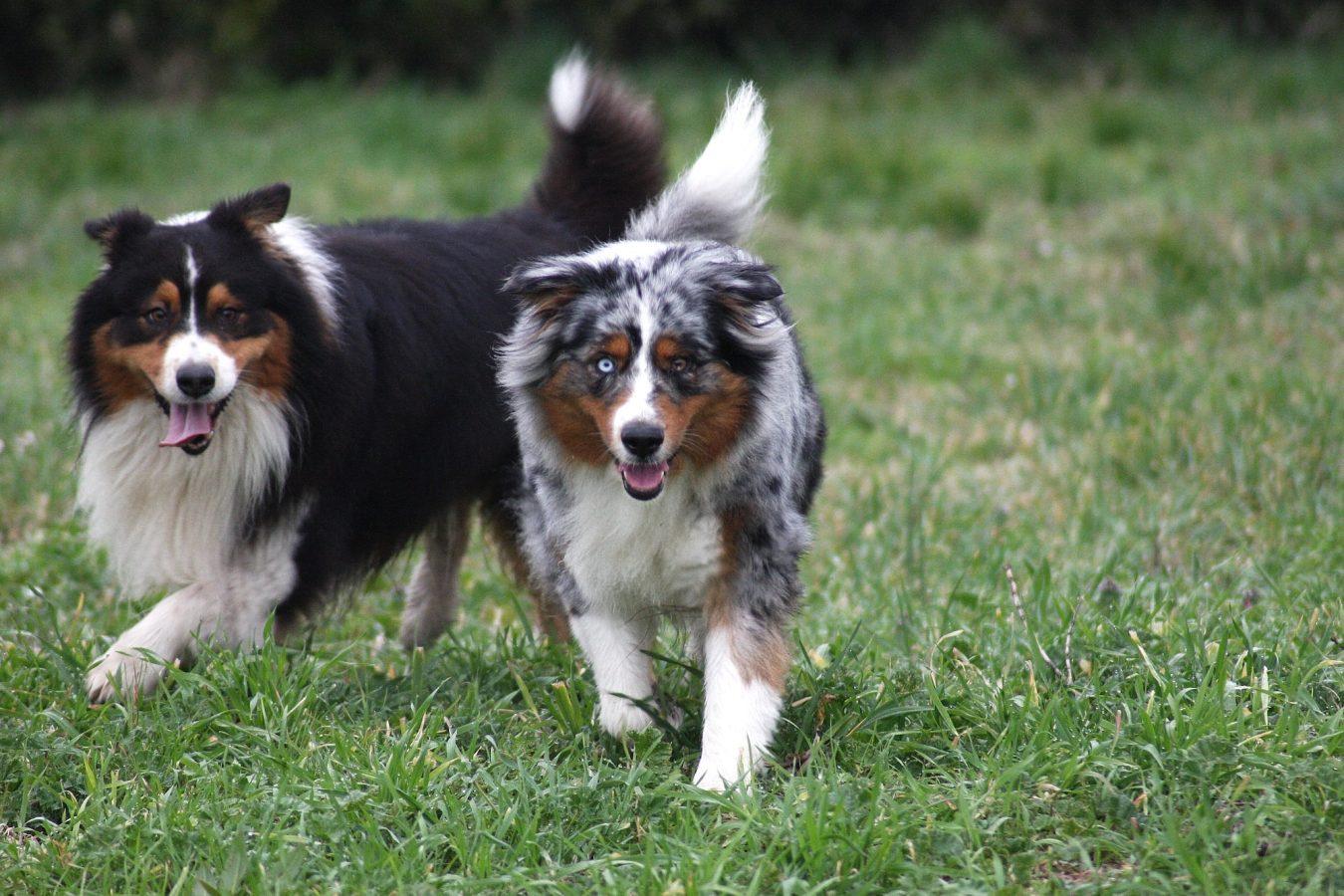
Australian Shepherds, like most herding dogs, are very smart dogs. They have ties to Australia but did not originate there. It may be that they are not true Australians. The Australian Shepherd, sometimes called the “Aussie,” descended from European herding dogs. Aussies immigrated to Australia years ago and then found their way to California. Since the California ranchers thought the dog was originally from Australia, they called it the Australian Shepherd. Whatever its beginnings, the Aussie is a familiar sight at rodeos.
A cowboy named Jay Sisler made the Aussie a famous rodeo dog when, in the 1950s and 60s, he trained his dogs, Stub, Shortie, and Queenie, to do tricks. His dogs starred in the Disney movie “Run, Appaloosa, Run.” As a herding dog, cowboys used the Aussie to help round up the “dogies” (pun intended). “Dogies” is probably best known as part of the lyrics from an old cowboy song, which goes like this: Whoopee ti yi yo, git along little dogies. It’s your misfortune and none of my own. Whoopee ti yi yo, git along little dogies, you know that Wyoming will be your new home
The Australian Shepherd is longer than it is tall, but is a well-balanced, sturdy, and excellent herding dog. They come in different colors but are commonly merle, a mottled pattern with shades of blue or red. They can outsmart a novice owner, so if you decide to get an Aussie, be ready for a tireless, intelligent, and highly trainable partner.
Australian Shepherd (Aussie)
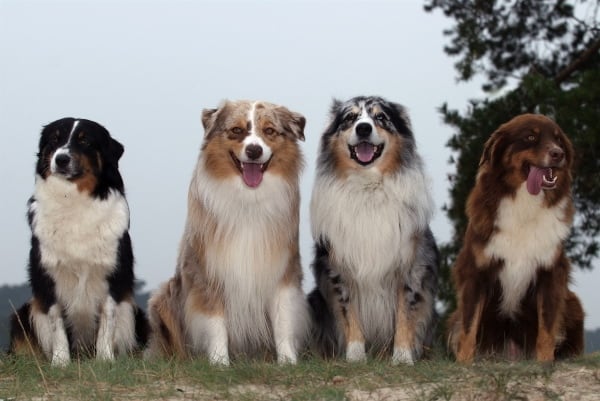
The Australian Shepherd is a highly intelligent, energetic, and versatile medium-sized herding dog. Despite its name, the breed was developed in the western United States, not Australia. It earned its name because it was used to herd sheep imported from Australia in the 19th and early 20th centuries.
Physical Characteristics
- Size: Medium build. Males typically stand 20–23 inches (51–58 cm) at the shoulder and weigh 50–65 lbs (23–29 kg). Females are slightly smaller at 18–21 inches (46–53 cm) and 40–55 lbs (18–25 kg).
- Coat: Medium-length, double coat that is weather-resistant. It can be straight or wavy. The breed is famous for its striking merle pattern (mottled blue/gray with black patches), as well as solid colors such as black, red, blue, and red merle. Many have white markings on their chests, faces, and legs.
- Eyes: Often striking blue, amber, green, or brown. Some Aussies have heterochromia (two different colored eyes) or “split eyes.”
- Tail: Naturally bobbed (short) or docked in many lines, though natural long tails are also seen.

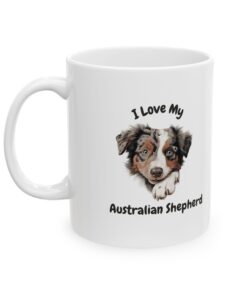

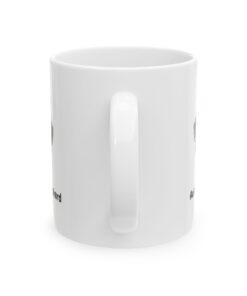
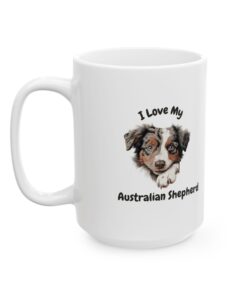
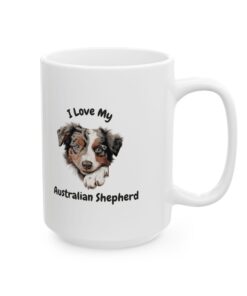
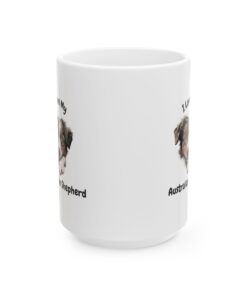
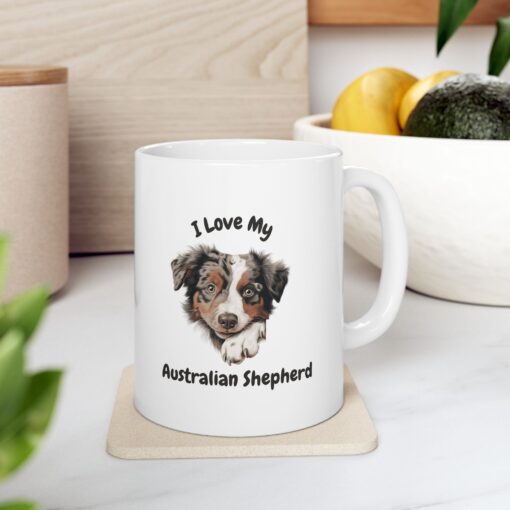
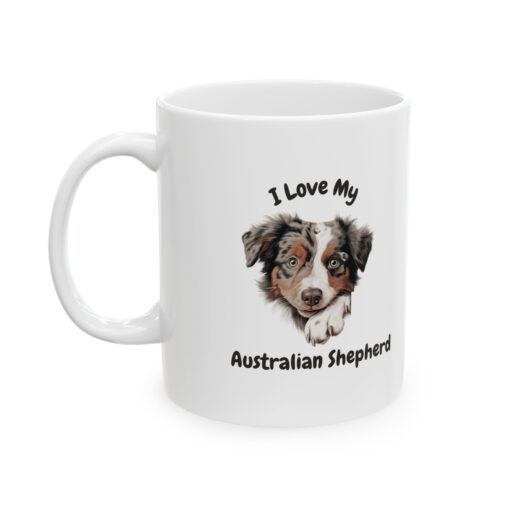
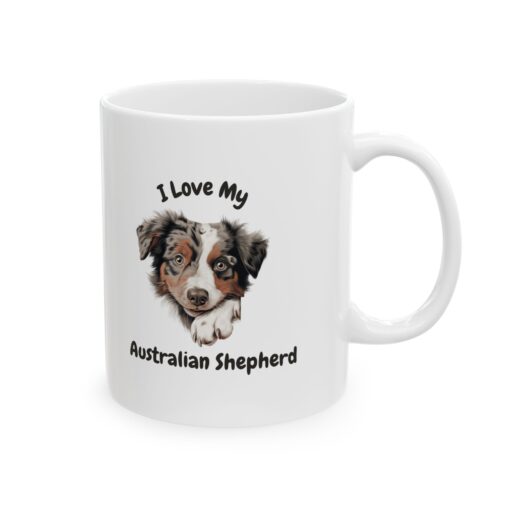
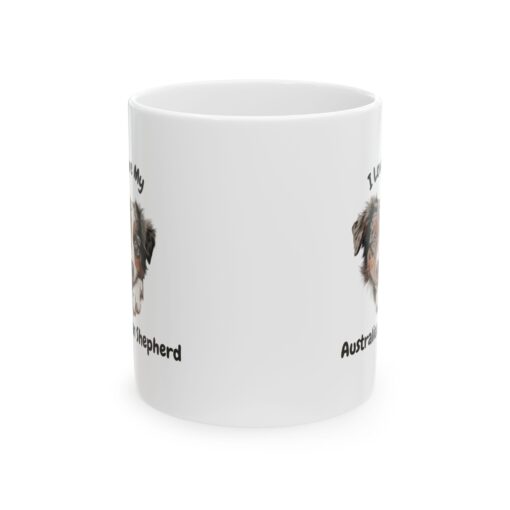
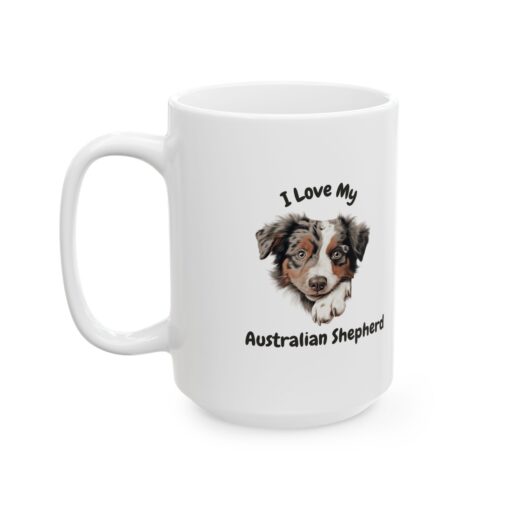
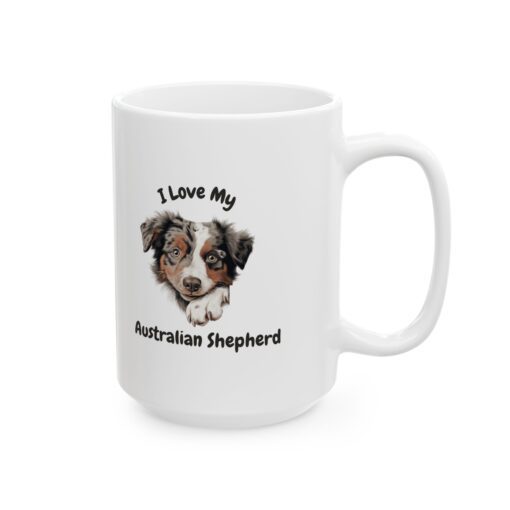
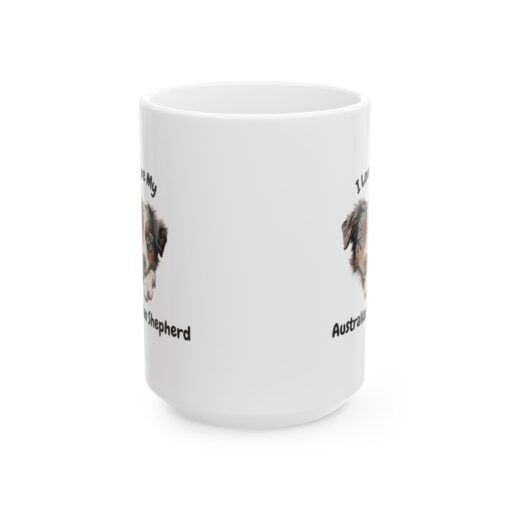
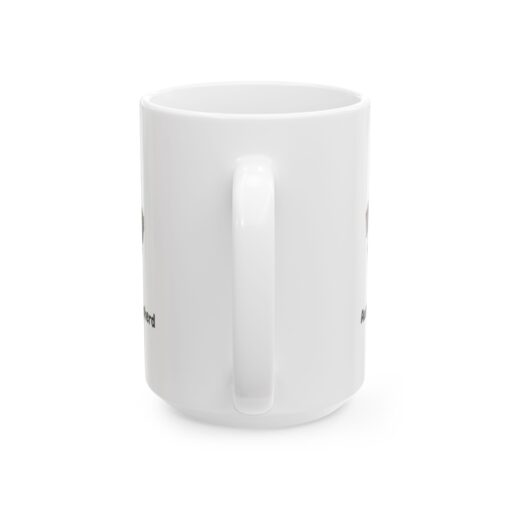
Australian Shepherd Dog Mug (11oz/15oz)
A bright, glossy ceramic mug that brings a touch of handcrafted charm to everyday routines. The artwork wraps neatly around the white surface, letting vivid inks pop against the clean background.
Temperament
Australian Shepherds are known for being:
- Extremely intelligent and quick learners (often ranked among the top 10 smartest breeds).
- Highly energetic and athletic — they need substantial daily exercise and mental stimulation.
- Loyal, affectionate, and protective of their family.
- Reserved but not aggressive toward strangers when properly socialized.
- Strong herding instinct, which can lead them to “herd” children, other pets, or even cars if not given an appropriate outlet.
They thrive when given a job. Without sufficient physical and mental activity, they can become bored and develop destructive behaviors such as excessive barking, digging, or chewing.
Lifestyle and Care
- Exercise: Requires at least 1–2 hours of vigorous activity daily. Excellent at agility, flyball, herding trials, obedience, and hiking.
- Training: Highly trainable and responsive to positive reinforcement. They excel in dog sports and often work as service, therapy, or ranch dogs.
- Grooming: Moderate shedding (heavier during seasonal blows). Regular brushing, occasional baths, and nail trims are usually sufficient.
- Lifespan: Typically 12–15 years.
- Health: Generally hardy but can be prone to hip and elbow dysplasia, eye issues (especially in merles), and certain genetic conditions such as MDR1 drug sensitivity.
Ideal Owner
Aussies are best suited for active individuals, families, or farms who can provide structure, training, and plenty of outlets for their drive. They are not ideal for couch-potato lifestyles or first-time owners who can’t commit to daily engagement.
In short, the Australian Shepherd is a brilliant, tireless, and devoted working dog that shines brightest when given a purpose and an active life. They’re often described as “high-octane” companions who bond very closely with their people.
Are Australian Shepherds Good With Kids?
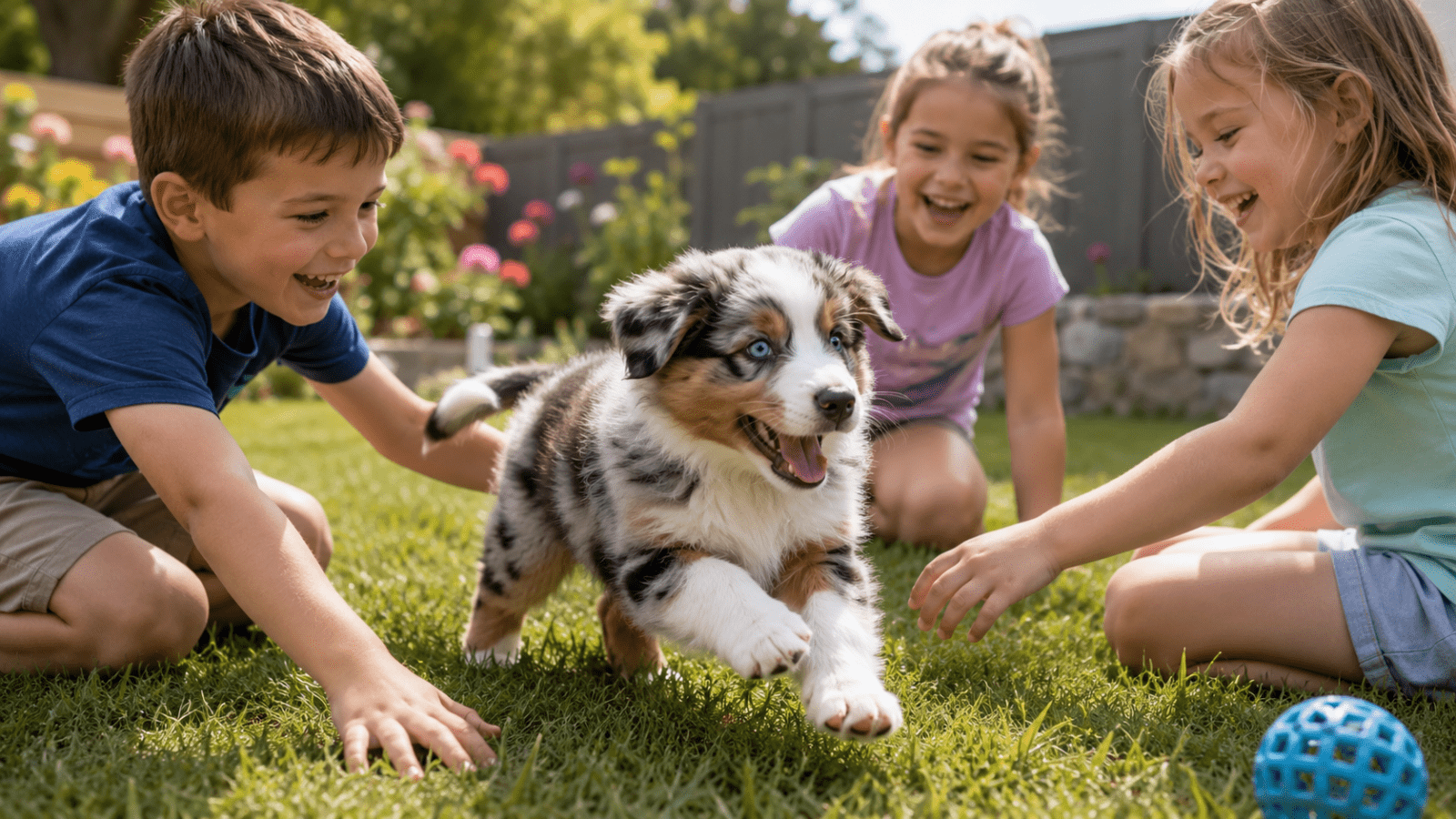
The Australian Shepherd stays young at heart throughout its lifetime. It is even-tempered, likes to romp and play, and does well with children. Aussies have a strong work ethic and may put it to work by being bossy or trying to herd young children. Aussies are affectionate and like to cuddle with their favorite person or other family members. They may not show the same desire to cuddle with strangers.
However, Aussies love the outdoors and generally will not destroy your backyard by digging holes unless it is very dull. Australian Shepherds have an instinct to be alert to threats to their family. They are excellent watchdogs. They are not usually aggressive towards strangers, however, so being a guard dog is not something they are good at.
Aussies do well with other family pets but may also try to herd them. They are loyal dogs and tend to bond closely with one family member. They do not have a reputation for being quiet dogs and bark at strangers whenever they feel the situation calls for it. They are not constant barkers, but if they suffer from separation anxiety, incessant barking might be one of their reactions to being left alone.
Is The Australian Shepherd Healthy?
Generally, the Australian Shepherd is healthy, but some genetic issues can cause deafness or blindness. They have a lifespan of 12 to 15 years. If both parents of an Aussie puppy are merle, the puppy has a high risk of being blind or deaf.
Regular vet check-ups and a balanced diet are essential for maintaining their health. Daily exercise is crucial for maintaining their high energy levels and helps prevent obesity and behavioral issues. Mental stimulation through training and interactive toys also contributes to their well-being. Socialization from a young age can help minimize any potential anxiety or fearfulness. With proper care, Australian Shepherds can lead fulfilling and active lives alongside their families.
Veterinary check-ups can help monitor for any potential health issues. Providing a balanced diet and regular exercise is essential for maintaining their overall well-being. Socialization from a young age can also help mitigate behavioral problems and enhance their adaptability. Owners should be aware of their high energy levels and need for mental stimulation to prevent boredom. Engaging in activities such as agility training or obedience classes can benefit both the dog and the owner.
Are Aussies Easy to Train?
Since Australian Shepherds are very smart dogs, you can train them quickly. They make good watchdogs and are very courageous. However, because they are so bright, Aussies need a lot of mental and physical stimulation to prevent boredom. They do not like being left alone and can get nervous and destructive. The Aussie’s trainability and skills make it very successful in dog sports such as flyball, dog agility, and disc dog. And, of course, they do very well in a sheepdog trial. Aussies are frequently used as search-and-rescue dogs, detection dogs, service dogs, and therapy dogs.
Their high energy levels require regular exercise, ideally through daily walks, playtime, or engaging activities like frisbee. Socialization from a young age is crucial to ensure they are well-adjusted and friendly with other animals and people. Owners should utilize positive reinforcement techniques during training to build a strong bond and encourage good behavior. Given their herding instincts, it’s important to provide structured activities to channel their drive effectively. With the right environment and guidance, Australian Shepherds can thrive and become loyal companions.
Are Aussie Dogs Expensive?
Aussies are relatively famous in the United States, ranking 17th on AKC’s list of most popular breeds, so they are not a rare breed. You can probably expect to pay about $1,000 for an Aussie. Ironically, the Australian Shepherd is a rare breed in Australia, and buyers there can expect to pay twice as much as it costs in the United States. You may be able to adopt an Aussie from a rescue organization. A good place to start is the Aussie Rescue and Placement Helpline website.
Aussies require regular exercise and mental stimulation to stay happy and healthy. Their intelligence and energy levels make them ideal companions for active families or individuals. Grooming is also essential, as their thick double coat can mat if not properly maintained. Training should begin early to harness their natural abilities and ensure good behavior. Overall, owning an Aussie can be a rewarding experience for those ready to invest time and effort into caring for their pet.
For more information
American Kennel Club, United States, Australian Shepherd Association.